

"I thought God only spoke English, not Chinese," said Hannah, whose Chinese name I still struggled to pronounce, even after four weeks of rooming together. "If I pray in Chinese, will God understand?"
We were perched on plastic stools at a sticky table in the middle of the night market. An incandescent bistro light illuminated us from above as Hannah used her chopsticks to pluck a plump noodle from her bowl of spicy soup.
In two days, I'd be leaving China to return home. Hannah's question seemed to take on a new urgency as our time together ran out.
Her elbows propped on the sticky tabletop, noodle suspended, Hannah waited for the answer she hoped to be true.
What Every Good Story Needs
That moment from nearly 30 years ago is still vivid in my mind.
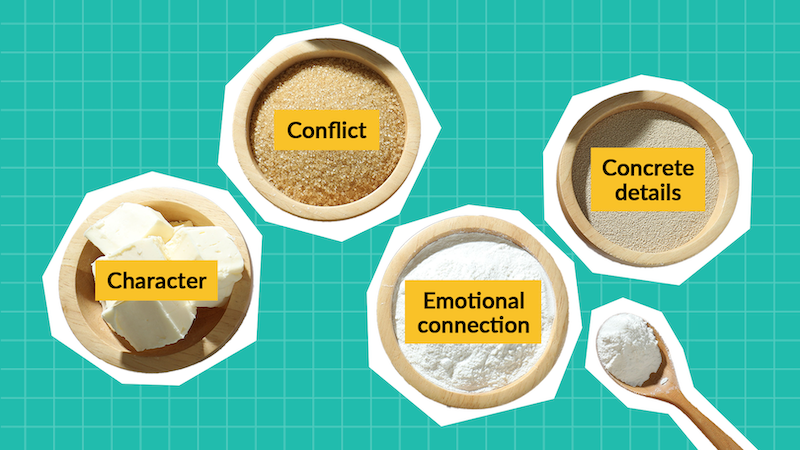
And the reason it's so memorable is because of four key ingredients that every effective fundraising story needs:
- One character: Hannah, a curious Chinese woman
- A clear conflict: A question made urgent by my imminent departure
- Emotional connection: The tension of fear and hope in wondering whether she's heard
- Concrete details: Sensory details that anchor the story in a place that feels real
Think of a story that grabbed you so hard it's taken up permanent residence in your mind.
Why is it so memorable? Because the four ingredients brought it to life for you.
The Power of Specificity
The four ingredients work together to produce an immersive experience for your donors. They create a world to get lost in, a real person to relate to, and a tangible situation.
The four ingredients make a story specific so donors can see it. And when they see it, they begin to feel it.
Finding the Four Ingredients in Your Own Stories
Once you know the four ingredients, you'll start seeing them in every story—or notice where they're missing.
Let's dig into the Four-Ingredient Framework.
Character: What does the person at the center of the story want, and what's standing in their way? If multiple people show up, focus on whoever changes the most from beginning to end.
Conflict: What's the core problem, and what's at stake if nothing changes? A story without a clear conflict won't hold anyone's attention.
Emotional connection: What does your character feel at the start—fear, hope, shame, longing? What shifts as their situation changes? The more your donor can emotionally relate to and recognize a piece of their own experience in the story, the more they'll be moved to care.
Concrete details: What can be seen, heard, touched, smelled, or tasted in the story? Small, specific details make a story feel real instead of generic—and make it stick in someone's memory.
Why So Many Nonprofit Stories Fall Flat
Without the four ingredients, a "story" isn't really a story.
Instead of showing a single person you can picture, it describes a faceless group.
Instead of a clear conflict, it glosses over the stakes, leaving no sense of what is on the line.
Instead of a compelling narrative, it's a chronology of events—dates and outcomes with no drama, no emotional pull, no concrete details to make them memorable.
I see this constantly in nonprofit welcome series, email appeals, web copy, and social posts with stories that aren't carrying their weight.
When a story doesn't land, the cost isn't just an underperforming appeal.
It's a donor who doesn't renew or even a high-net-worth conversation that never gets the emotional traction needed to compel a generous response.
Why You Don't Need Creativity to Tell Stories
Here's the good news: Crafting a story with all four ingredients doesn't require an MFA in creative writing or becoming a master storyteller. Nor does it require loads of time.
It requires knowing what to look for.
Once you know how to find the ingredients and draw them out, you'll be able to craft stories faster and with more confidence.
Want to Test Drive the Four-Ingredient Framework?
Download your free Story Worksheet to get started crafting nonprofit stories without the guesswork.
Grab your worksheet here.
Katie Whitehorn is a Senior Copy Director and Creative Lead at Historic, part of Masterworks. We're excited to announce her new book, From Stuck to Story about how to uncover and tell stories that move people to care and act.